
Sub-Total: $0.00
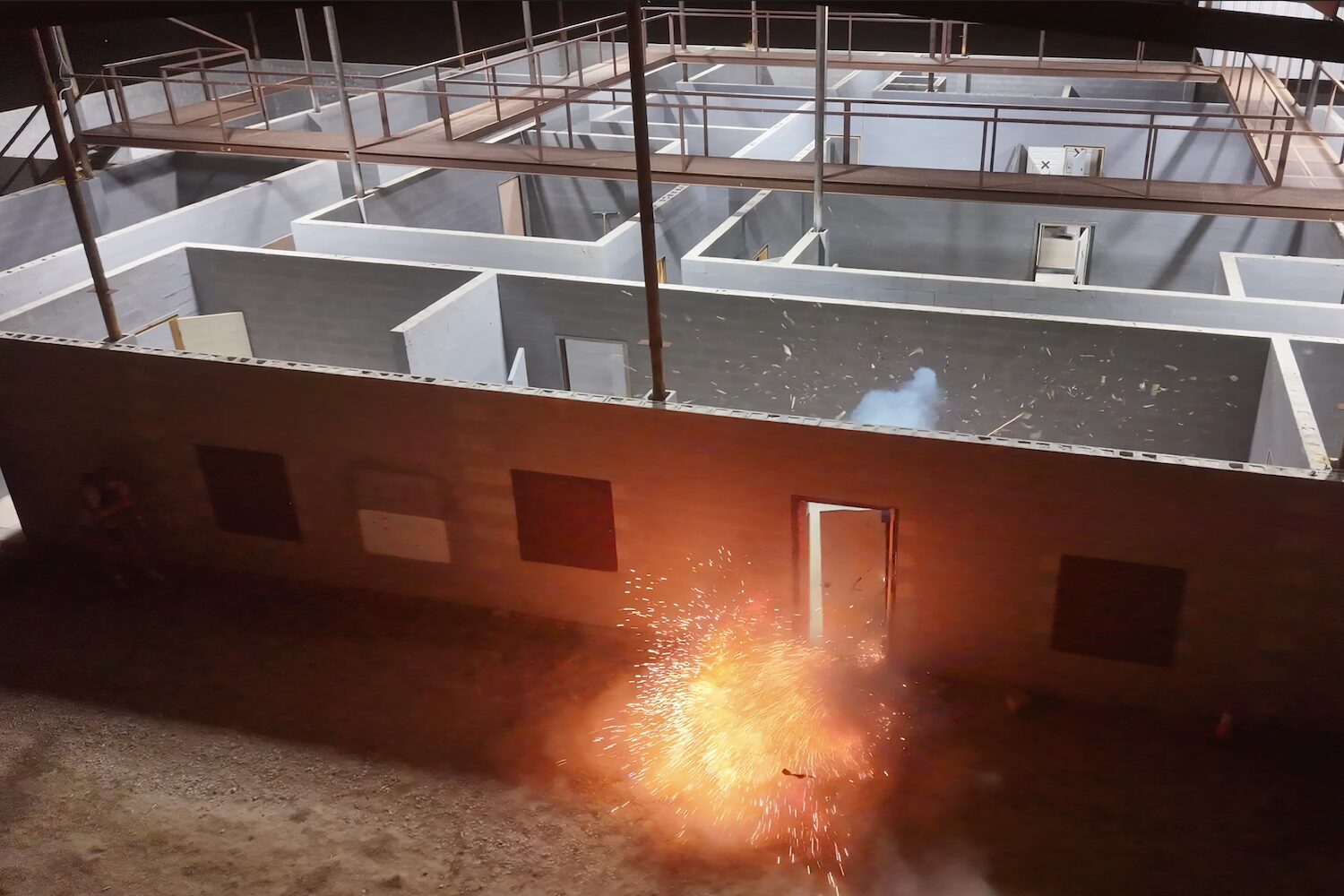
Military Breaching Training: What SOF Does Differently—and What Tactical LE Can Learn
A SWAT team is not a special operations unit, and it shouldn’t try to train like one simply because something looks impressive.
The missions are different. Authorities are different. Operational requirements, resources, staffing, and training time can be very different.
There are, however, principles behind effective military breaching training that translate well to tactical law enforcement.
One of the biggest is repetition.
High-level training programs do not expect proficiency to come from occasional exposure to a skill. Personnel build a foundation, repeat the work, receive feedback, correct problems, and eventually apply those skills under more demanding conditions.
For a tactical LE team, the useful question isn’t, “How do we copy SOF?”
It’s, “What makes their approach to training effective, and which of those principles make sense for our mission?”
Understanding Breaching as a Training Discipline
Breaching is more than learning how to defeat a door.
Operators need familiarity with their equipment, an understanding of the problems they may encounter, sound technique, communication, coordination, and the ability to adapt when the first approach doesn’t produce the expected result.
Those capabilities are difficult to develop through occasional exposure.
Like other perishable tactical skills, breaching benefits from a training program that allows personnel to build proficiency through repetition and then apply those skills under progressively more realistic conditions.
The quality of the training infrastructure matters because it determines how easily instructors can create those repetitions.
Repetitions Have to Be Easy Enough to Generate
If every breaching rep requires a new door, substantial construction, extensive setup, or access to a specialized facility, instructors are eventually forced to ration reps.
That creates a training problem regardless of how good the lesson plan is.
A team may have four hours scheduled, but if a significant portion of that block is spent building and resetting targets, the actual training time is considerably shorter.
Good training infrastructure should make it practical to run the skill again.
An operator completes a repetition. The instructor identifies a problem. The operator makes the correction and gets another rep while the feedback is still fresh.
That cycle—train, evaluate, correct, repeat—is where much of the development occurs.
If resetting the training environment takes too long, that cycle gets interrupted.
Build the Skill Before You Add Complexity
Complex scenarios have a place in breaching training, but they are most valuable after the fundamentals are established.
Start by giving the operator an opportunity to work on the breaching skill itself. This allows the instructor to see exactly what is working, identify what needs to change, and give the operator another rep while the correction is still fresh.
Once the operator can perform the skill consistently, begin adding the other elements of the operation. Bring in team movement and communication, incorporate the breach into a larger scenario, and then progressively introduce conditions that make the problem more demanding.
A simple training progression looks like this:
1. Build the individual skill
Focus on the breach itself. Develop proper technique and repeat it until performance becomes consistent.
2. Integrate the team
Add communication, positioning, timing, and coordination with the rest of the element.
3. Apply the skill in a scenario
Make the breach one part of a larger tactical problem rather than the entire training objective.
4. Add relevant complexity
Once the fundamentals hold up, introduce realistic variables and constraints that require the operator and team to adapt.
The exact progression will vary by team, mission, and training objective. What matters is that complexity is added for a reason.
Build the skill first. Then test whether that skill holds up as the problem becomes more complex.
The Breach Is Only One Part of the Problem
Breaching can easily become its own training event: defeat the door, reset it, do it again.
That work is necessary, particularly while personnel are developing fundamentals. Eventually, though, the breach has to fit into the rest of the team’s operation.
A door can be defeated successfully while the overall evolution still goes poorly. Communication can break down. Timing can be off. Equipment can interfere with movement. Personnel can solve the obstacle but create another problem for the team.
This is why mature training programs move beyond evaluating whether the door opened.
Once the individual skill is established, instructors can evaluate how the breacher’s actions affect the rest of the element and the overall operation.
Train With the Tools Your Team Actually Uses
The principles behind effective training also apply to tactical breaching tools.
Mechanical, hydraulic, ballistic, thermal, and other breaching capabilities are not interchangeable, and not every method is appropriate or authorized for every team.
Rather than building training around whatever happens to be easiest to replicate, teams should be able to train with the tools and methods they are actually expected to use.
That familiarity matters.
Operators should know how their equipment handles, what it requires from them, where its limitations are, and how it fits into the rest of the team’s procedures.
A reusable breaching training system can support this by giving teams a consistent platform on which to generate repetitions with multiple authorized tools and methods instead of building an entirely new training environment for every evolution.
Don’t Build a Team That Only Knows One Answer
Teams naturally become comfortable with the methods, tools, and problems they encounter most often.
Comfort is useful until it becomes dependency.
Military and law-enforcement units have different authorities and capabilities, and not every breaching method is appropriate or authorized for every team. Training should always remain within the unit’s mission, policy, equipment, and personnel qualifications.
Within those boundaries, however, personnel benefit from having to recognize different problems rather than simply repeating the same solution.
If every training door presents the same problem in the same way, the team may become very good at defeating the training prop without becoming significantly better at solving unfamiliar problems.
Variation should be deliberate and relevant—not random.
Perfect Conditions Are for Learning—Not Staying
Good lighting, good footing, plenty of room, correctly staged equipment, and an instructor standing nearby are useful when someone is learning.
Once the fundamentals are established, those should not be the only conditions under which the skill is practiced.
Training can progressively introduce conditions relevant to the unit’s actual work.
The key word is progressively.
Making an evolution difficult simply because difficult training looks more “tactical” does not automatically make it valuable. Added complexity should expose a specific weakness, test a particular capability, or support a defined training objective.
Otherwise, it’s just complication.
Breaching Is a Thinking Skill Too
Strength and technique matter, but the breacher’s job is not simply to hit something until it opens.
Personnel have to recognize what they’re dealing with, work within established procedures, communicate, understand their available options, and respond when the expected result doesn’t happen.
That means instructors can evaluate far more than whether the breach was ultimately successful.
Depending on the team’s procedures and training objective, useful observations may include:
- Problem recognition
- Communication
- Coordination
- Equipment familiarity
- Efficiency
- Adaptability
- Adherence to team procedures
- Response to an unsuccessful first attempt
Those observations make each repetition more valuable because the operator knows what needs to change on the next one.
Let Operators Make Correctable Mistakes in Training
A training environment where everything works perfectly every time is not necessarily a good training environment.
Personnel need opportunities to encounter problems while an instructor can evaluate what happened, make a correction, and run the problem again.
That does not mean intentionally creating unsafe training or chasing failure for its own sake. It means recognizing that mistakes provide useful information when personnel have an opportunity to correct them.
This is another reason repetition matters.
If an operator only gets one or two attempts, an instructor can explain the correction, but the operator may not have an opportunity to immediately apply it.
With enough repetitions, the operator can make the adjustment and find out whether it actually solved the problem.
Standardization and Adaptability Can Coexist
Teams need standards. They also need personnel who can operate when circumstances do not perfectly match the standard training problem.
Those goals are not contradictory.
Standardized expectations for safety, communication, equipment, procedures, and performance give personnel a common foundation. Once that foundation exists, instructors can present different problems that require operators to apply what they know instead of simply following a memorized sequence.
The objective is not unpredictability for its own sake.
It is reliable performance when the environment changes.
Choosing the Right Breaching Training Equipment
The same training principles should guide equipment decisions.
The best breaching training equipment for a particular unit depends on what that team actually needs to accomplish.
When evaluating a training system, consider:
- Which breaching methods and tools the team needs to train with
- How quickly the system can be reset between repetitions
- Whether operators can train on realistic door and hardware configurations
- Consumable requirements and ongoing costs
- Portability and storage requirements
- Available training space and facilities
- Number of operators who need repetitions
- How the system can be incorporated into larger team scenarios
A training system should support the training objective rather than dictate it.
For teams that need frequent breaching repetitions, reusable infrastructure can make it easier to move from individual skill development into integrated team training without rebuilding the training environment after every evolution.
Maintain the Tools—and the Training System
Training equipment is only useful when it is ready when the team needs it.
Breaching tools should be inspected, maintained, and stored according to the manufacturer’s requirements and the unit’s established procedures. Training systems also need routine inspection and maintenance, particularly when they see frequent use from multiple operators.
That should be part of the training program rather than an afterthought.
Equipment familiarity includes understanding its condition, setup, maintenance requirements, and limitations—not simply knowing how to use it during an evolution.
What Tactical LE Can Take From Military Breaching Training
For most tactical LE teams, the useful lessons have less to do with copying specific SOF techniques and more to do with examining how the training program is built.
Ask:
- Are our breachers getting enough meaningful repetitions?
- Can instructors correct a problem and quickly run it again?
- Do we build individual proficiency before moving into complex scenarios?
- Do we train with the tools and methods our personnel actually use?
- Do we eventually integrate breaching with the rest of the team?
- Are we teaching personnel to recognize problems or memorize one solution?
- Does our training become more demanding as proficiency improves?
- Is our training infrastructure helping us get reps—or limiting them?
Those questions apply whether the unit is a large metropolitan SWAT team, regional SRT, federal element, Guard unit, or smaller agency trying to make the most of a limited training calendar.
Better Training Principles Don’t Require a SOF Budget
Most law-enforcement teams will never have the personnel, facilities, training schedule, or budget available to a military special operations unit.
They don’t need them to apply the underlying principles.
Build the fundamentals. Get enough repetitions to make meaningful corrections. Integrate the skill with the team. Add relevant complexity as proficiency improves. Evaluate what happened. Correct it. Run it again.
The harder part is often creating a training environment that makes that volume of useful practice possible.
That is the problem Breach Pro is designed to help solve.
Breach Pro builds reusable training systems for military and law-enforcement teams that want to spend less of their training day sourcing, building, replacing, and resetting targets—and more of it actually training.
Because the value of a training system isn’t the door itself. It’s what your team can do with it, rep after rep.