
Sub-Total: $0.00
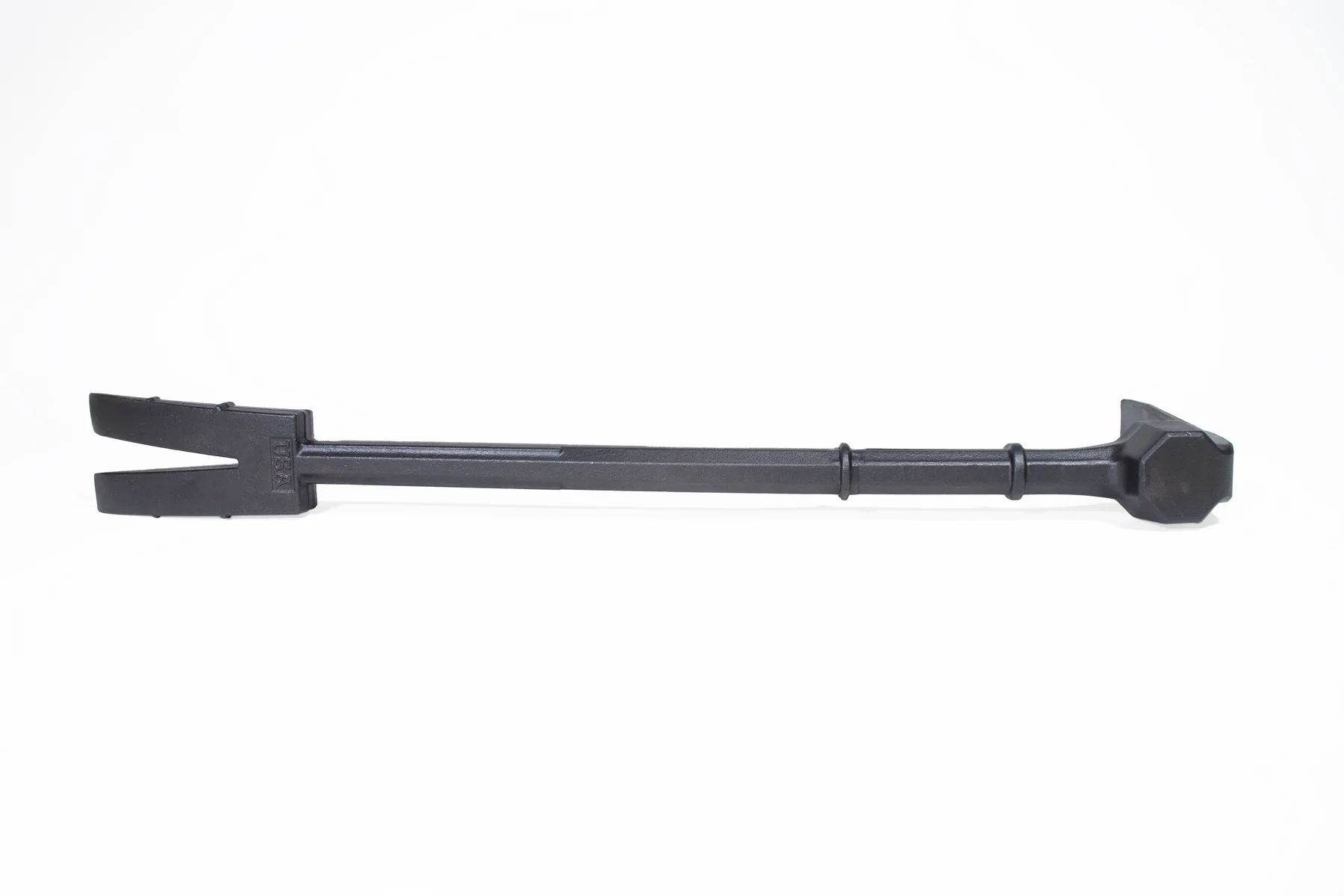
Breaching Halligan Guide
Table of Contents
- Introduction: Halligans in Tactical Breaching
- Halligan Geometry and Its Relevance to Tactical Entry
- Spike vs. No Spike in Tactical Halligan Use
- Why the Adze and Fork Dominate Tactical Halligan Use
- Adze Roll as a Vertical Cam and Fatal-Funnel Mitigation
- Tactical Halligan Selection Considerations
- Summary and Next Steps
Choosing a Halligan for Tactical Breaching Operations
Mechanical breaching remains a core capability for tactical law-enforcement and military units tasked with deliberate entry. Among mechanical tools, the Halligan continues to be widely adopted because its geometry directly supports the most common structural defeat problems encountered during door-centric operations.
This guide focuses specifically on Halligan selection and use in a tactical breaching context, not fire or rescue operations. The recommendations reflect established mechanical breaching practices, close-quarter movement considerations, and the realities of working under threat rather than fireground conditions.
1. Halligan Geometry and Its Relevance to Tactical Entry
A Halligan tool is defined by three primary working elements:
- Adze: a flattened, tapered blade used to initiate gaps between doors and frames
- Fork: a split geometry designed to straddle hardware, hinges, or frame components and apply leverage
- Spike (or pike): a pointed penetration element intended for probing or puncture
In tactical breaching, adze and fork geometries account for the majority of mechanical entry tasks. These elements allow controlled gapping, predictable leverage, and repeatable techniques that can be trained and executed under stress.
2. Spike vs. No Spike in Tactical Halligan Use
Most tactical units deliberately select Halligans without a spike. This reflects operational priorities rather than tradition.
In close-quarter environments, a protruding spike increases snag hazards, complicates tool transitions, and introduces unnecessary injury risk during movement or repositioning. Tactical mechanical entry overwhelmingly targets doors, frames, hinges, and locksets—problems best solved through adze-based gapping and fork-based leverage rather than point penetration.
The trade-off is reduced penetration capability. Spike-equipped Halligans remain appropriate for wall breaching, probing, or unconventional access points where no seam exists. For door-centric tactical breaching, however, spike-less Halligans are often the more appropriate choice.
3. Why the Adze and Fork Dominate Tactical Halligan Use
3.1 Adze as the Primary Gapping Tool
In tactical entry, the adze is commonly the initial contact point. It is set between the door and frame, driven if necessary with a striking tool, and used to create an initial gap.
The adze’s flat, tapered profile supports controlled separation of materials and predictable force application during the most exposed phase of entry.
3.2 Fork for Controlled Defeat
Once purchase is established, the fork is used to straddle locksets, hinges, or frame elements and apply leverage. Fork techniques translate applied force efficiently into structural failure and are repeatable across operators and environments.
Mid-Article Call to Action
If your team is evaluating Halligans for tactical breaching, Breach Pro offers mission-focused guidance and purpose-built tools. You can book a call with our team to discuss your operational requirements or review our Halligan offerings designed specifically for tactical entry.
4. Adze Roll as a Vertical Cam and Fatal-Funnel Mitigation
A key technical characteristic of the Halligan adze is its function as a vertical cam rather than a horizontal lever.
After the adze is set in the door-frame seam, the operator rolls the tool so the adze rides upward or downward against the interface. This rotational movement incrementally increases the gap and improves purchase.
A typical sequence includes:
- setting the adze in the seam, striking if required
- adopting an offset stance relative to the doorway
- rolling the bar to cam the adze up or down
- transitioning to leverage or fork engagement once adequate purchase exists
This technique allows the breacher to make progress while remaining off the door plane, reducing exposure to the fatal funnel during the most vulnerable stage of entry. Spike-less Halligans support this approach by allowing smoother, unobstructed camming and more predictable force transfer.
5. Tactical Halligan Selection Considerations
When selecting a Halligan for tactical breaching, operators and procurement personnel should evaluate:
- adze thickness and taper appropriate for modern residential and commercial frames
- fork geometry compatible with contemporary locksets and hinges
- spike configuration aligned with mission profile and movement constraints
- overall balance and controllability in confined spaces
No single configuration is universally correct. Proper selection depends on the environment, threat model, and anticipated breach problems.
6. Summary and Next Steps
In tactical breaching, the Halligan is not a general-purpose tool. It is a precision mechanical instrument whose effectiveness depends on geometry, configuration, and technique.
Most tactical operators favor adze-and-fork-focused Halligans without spikes because they offer predictable handling, controlled force application, and safer use in close-quarter, door-centric operations. The trade-off is reduced penetration versatility, which may matter in unconventional breach scenarios.
If this guide was useful and you want to apply it to real-world equipment decisions, Breach Pro can help. Book a call with our team to walk through mission profiles, door types, and tool configuration, or check out our Halligan offerings built for modern law-enforcement and military breaching operations.