
Sub-Total: $0.00
How Much Does Door Breaching Training Cost?
The Real Cost of Door Breaching Training
Why Cost Per Repetition Matters More Than Cost Per Door
Most agencies know what a door costs.
Far fewer know what a training repetition costs.
That is the number that matters.
Breaching programs are not built on doors. They are built on repetitions. Every meaningful rep improves placement, technique, confidence, speed, and safety.
So the better question is not:
“How much does a door cost?”
It is:
“How much capability are we generating for every dollar spent?”
The Cost Everyone Sees
Most agencies budget for the obvious items:
- Doors
- Explosives
- Ballistic Breaching Rounds
- Lumber
- Hardware
- Range fees
Current door pricing typically ranges from:
- $50–$150 for hollow-core interior doors
- $150–$580 for solid-core interior doors
- $270–$500 for builder-grade residential exterior doors
- $700–$1,000 for commercial steel doors and frames
Those numbers matter, but they are only part of the cost.
The Cost Most Agencies Miss
The hidden cost is time.
Before training starts, someone has to source materials, transport them, build targets, hang doors, inspect the range, and set up lanes.
After training ends, someone has to reset targets, remove debris, break down training aids, dispose of damaged material, and clean the range.
None of that creates repetitions.
If two instructors spend 30–45 minutes resetting a target at $35/hour, that reset represents roughly $35–$52.50 in labor.
Over multiple resets, that adds up.
More importantly, every minute spent rebuilding targets is a minute not spent training operators.
Training Day vs. Training Course
A training day and a training course are not the same thing.
A typical explosive breaching course may run three to five days. Across the full course, a student may conduct approximately eight live explosive breaches.
In a single training day, that same student may only conduct one or two live explosive events.
The rest of the day is spent on planning, charge construction, placement, safety procedures, demonstrations, and after-action reviews.
That makes each live repetition valuable.
The Better Metric: Cost Per Meaningful Rep
The most efficient breaching programs do not focus only on reducing consumable costs.
They focus on increasing meaningful repetitions while reducing non-training labor.
That means tracking:
- Cost per repetition
- Instructor hours required
- Setup time
- Reset time
- Annual training throughput
The goal is not to buy the cheapest door.
The goal is to generate the most useful training repetitions.
A Real-World Example
The New York State Police used BreachPro fabrication jigs to produce approximately 260 lock-set inserts in roughly six hours with a three-person team.
The point is not just lower material cost.
The point is standardization.
When target production is predictable, instructors spend less time building and more time training.
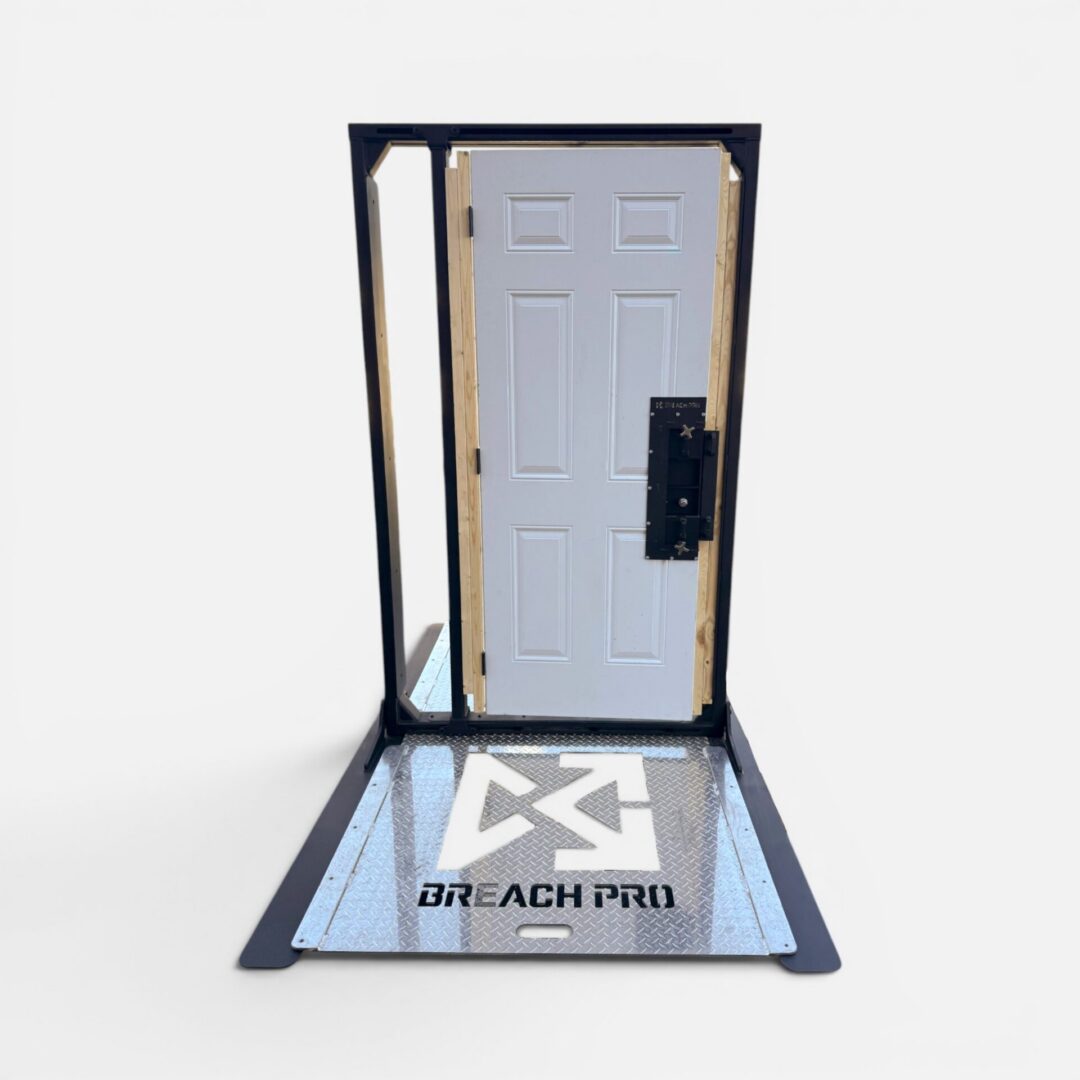
Where Purpose-Built Systems Fit
Purpose-built systems are not a replacement for live explosive training.
They support it.
They allow agencies to reserve live explosive events for validation while increasing lower-cost repetitions through mechanical, hydraulic, ballistic, and preparatory explosive training.
Using current material pricing, an MBI dummy lockset consumable can be produced for approximately $1.99 including labor.
At a $1,000 consumable budget, that supports approximately 500 inserts.
The objective is not fewer live breaches.
The objective is more productive training between live breaches.
Questions to Ask Before Your Next Training Event
Before your next breaching course, ask:
- How much time do we spend building targets?
- How much time do we spend resetting targets?
- How many meaningful repetitions does each operator receive?
- Where are we losing training time?
Those answers will tell you more than the price of a door.
If you are building a breaching range, training facility, or looking for ways to increase repetitions without increasing budget.
Conclusion
The true cost of door breaching training is not just doors, explosives, ammunition, or hardware.
It is the total cost required to create capable operators.
That includes instructor hours, setup time, target preparation, cleanup, disposal, and reset cycles.
The agencies that get the most value from their training budgets understand the real metric:
Cost per meaningful repetition.