
Sub-Total: $0.00

How to Choose a Quality Halligan or Pry Breaching Tool
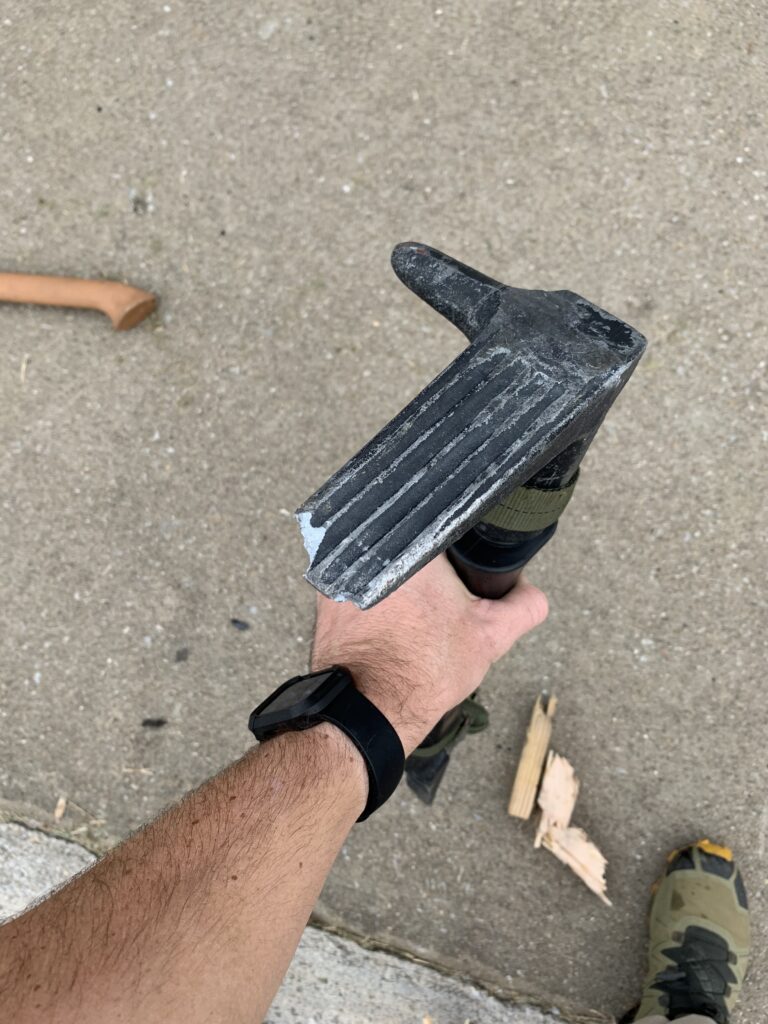
Mechanical breaching tools are among the simplest pieces of equipment carried by a tactical team—and among the easiest to underestimate.
A Halligan, pry bar, or multifunction breaching tool has no battery to charge, hydraulic circuit to maintain, or electronic component to troubleshoot. Its effectiveness depends almost entirely on material selection, manufacturing quality, geometry, leverage, and the operator’s ability to trust it under load.
That trust matters. During a forced-entry operation, a pry tool may be driven into a narrow gap, struck repeatedly, twisted against a steel frame, loaded with the operator’s full body weight, or used to attack hinges, locks, security plates, and reinforced door assemblies. A tool that bends, fractures, separates at a connection point, or loses purchase can injure the operator and delay access at the worst possible time.
This is why teams should evaluate mechanical breaching tools according to their intended mission—not according to a single attractive feature or marketing claim. Knowing how to choose a Halligan or pry tool suited to that mission is the first step toward a reliable forcible-entry capability.
Not Every “Halligan” Is Designed for the Same Work
The term “Halligan” is now applied to a wide range of products. They may resemble one another, but their construction can differ substantially.
Common configurations include:
- One-piece forged alloy-steel Halligans
- Cast or welded steel tools
- Stainless-steel tools
- Replaceable-head or modular tools
- Steel heads attached to fiberglass handles
- Non-sparking alloy heads attached to composite or fiberglass handles
- Lightweight tools intended primarily for residential construction
- Heavy-duty tools intended for steel doors, commercial frames, and fortified structures
Each configuration involves tradeoffs. Weight, electrical conductivity, corrosion resistance, spark generation, toughness, penetration geometry, and resistance to bending can all change with the material and manufacturing process.
The central procurement question should therefore be:
Is this tool engineered and rated for the doors, frames, locks, and structures our operators are most likely to encounter?
A specialty benefit does not automatically make a tool suitable for general tactical breaching.
The Specialized Role of Non-Sparking Breaching Tools
Non-sparking tools have a legitimate operational purpose.
Copper-based alloys, including certain aluminum-bronze alloys, are used in safety tools because they can provide non-sparking, corrosion-resistant, and nonmagnetic properties. The Copper Development Association identifies several aluminum-bronze alloys for non-sparking safety-tool applications.
OSHA guidance also recognizes non-sparking hand tools as one of the ignition-control considerations that may need to be addressed when personnel work in or enter a potentially flammable or explosive atmosphere.
That can make a non-sparking breaching tool appropriate for operations involving:
- Suspected flammable-vapor environments
- Hazardous-material incidents
- Fuel-processing or fuel-storage locations
- Certain confined-space operations
- Explosive manufacturing or storage areas
- Specialized EOD or technical-response missions
- Other environments identified through a formal hazard assessment
In those circumstances, reducing potential ignition sources may take priority over the capabilities expected from a conventional steel forcible-entry tool.
The problem arises when a specialty non-sparking tool is purchased and issued as a team’s primary, general-purpose pry tool.
Non-Sparking Does Not Mean Universally Safer
Some non-sparking Halligan-style tools use a composite construction with non-sparking working ends and an electrically nonconductive handle. These features can sound inherently superior during a purchasing comparison.
However, the mission limitations can be substantial.
Blackhawk’s published documentation for its Dynamic Entry non-sparking Hallagan tool line specifically states that the non-sparking alloy is not intended for use on steel doors and frames. The company directs users breaching steel doors toward its steel or stainless-steel alternatives.
That warning should not be interpreted as an admission that the tool is poorly made. It indicates that the tool was engineered for a different operational requirement.
The procurement mistake is not buying a specialized non-sparking tool. The mistake is purchasing that specialized tool without recognizing its limitations and then issuing it for routine work against steel doors and frames.
For tactical teams, steel is not an unusual breaching surface. Operators may encounter:
- Hollow-metal commercial doors
- Steel door frames
- Steel security doors
- Reinforced residential doors
- Metal security plates
- Steel hinges and hinge guards
- Multipoint locking systems
- Commercial latch and panic hardware
- Padlocks, chains, hasps, gates, and security grilles
A primary mechanical breaching tool should be selected around these probable threats unless a team’s operating environment clearly dictates otherwise.
Why Using the Wrong Tool Creates a Safety Problem
Prying places substantial bending, torsional, and impact loads into a tool.
During a conventional gap-set-force sequence, the tool may be driven into a compressed opening and then rotated against a resistant door or frame. The operator is intentionally creating leverage by multiplying force through the length of the tool. That load is transferred through the working end, shaft, handle, and every connection between them.
If a tool is used outside its stated limitations, several problems can occur:
- The working end can deform and lose penetration.
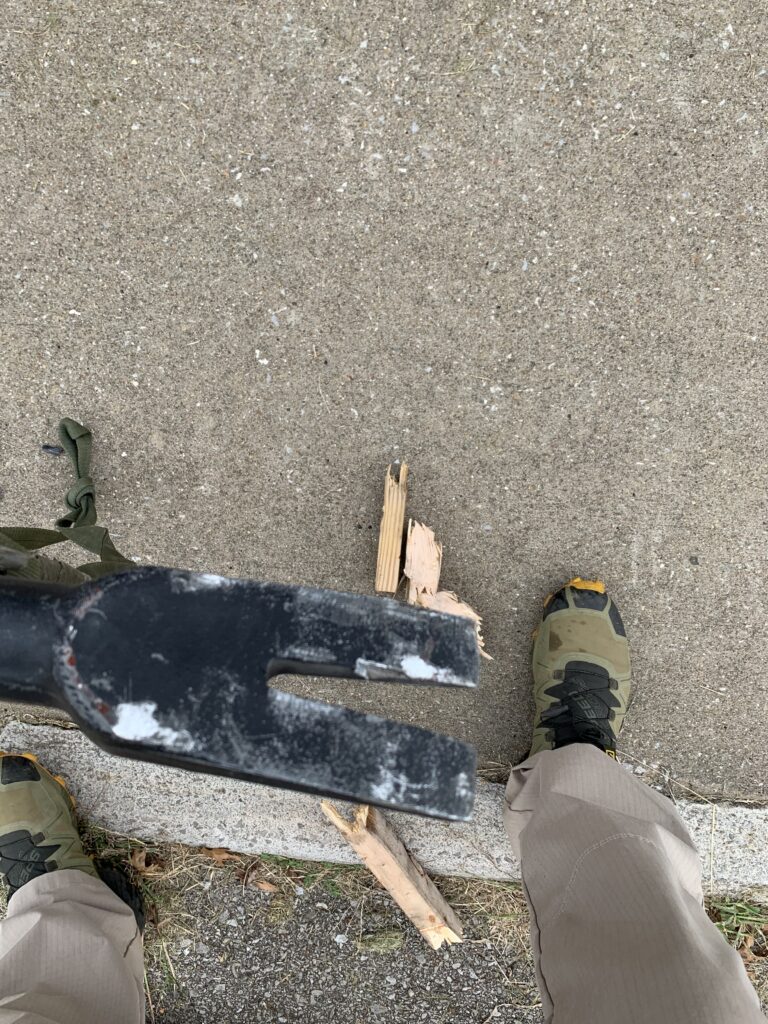
- The fork or adze can roll, mushroom, chip, or spread.
- A head-to-handle connection can loosen or fail.
- The handle can flex excessively or fracture.
- The tool can unexpectedly slip from the gap.
- The operator can lose balance when stored energy is suddenly released.
- Hands can be driven into the door, frame, or striking tool.
- The team can lose time while transitioning to another breaching method.
A tool does not need to shatter dramatically to create an operational failure. Excessive flex, permanent deformation, poor bite, or movement at a mechanical connection can be enough to compromise the breach.
The most defensible conclusion is therefore not that every bronze or composite breaching tool will break. It is that operators should never use a tool against steel doors or frames when its manufacturer states that it is not intended for those applications.
Why One-Piece Forged Steel Remains the General-Purpose Standard
For teams seeking a primary Halligan-style tool, one-piece forged alloy-steel construction remains a strong benchmark.
A one-piece design eliminates a separate head-to-handle interface. Drop forging also allows the material grain structure to follow the shape of the tool, while appropriate heat treatment can balance hardness, toughness, wear resistance, and resistance to permanent deformation.
For example, Council Tool describes its Halligan as being drop-forged in one piece from 4140 alloy steel, with heat-treated working ends intended to provide strength, toughness, and wear resistance. Its design also incorporates tuned forks, defined tapers, striking surfaces, squared shoulders, and depth-reference markings.
The original Halligan concept was similarly based on a single forged piece of high-strength steel rather than a cast, assembled, or multi-component construction.
That does not mean every one-piece steel Halligan is automatically excellent. Alloy selection, heat treatment, forging quality, finishing, geometry, and quality control still matter. However, a properly manufactured one-piece forged tool provides a logical starting point for heavy general-purpose forcible entry.
How to Choose a Quality Halligan or Pry Tool
1. A Clearly Defined Mission Rating
The manufacturer should plainly identify what the tool is intended to breach.
Look for specific references to:
- Steel doors and steel frames
- Residential and commercial construction
- Gap-set-force techniques
- Hinge-side and lock-side attacks
- Striking-tool compatibility
- Maximum load or intended duty level
- Restrictions on striking, prying, or energized environments
Avoid assuming that a product described as “tactical,” “military-grade,” or “professional” is suitable for commercial steel construction.
Ask the manufacturer directly whether the tool is approved for repeated use on steel doors and frames. Obtain that answer in writing when purchasing equipment for an agency.
2. Disclosed Material and Manufacturing Information
A quality manufacturer should be willing to identify how the tool is made.
Useful information includes:
- Steel or alloy designation
- Forged, cast, welded, or machined construction
- One-piece or multi-piece construction
- Heat-treatment process
- Hardness or toughness specifications
- Country of manufacture
- Quality-control procedures
- Batch, date, or manufacturer markings
Be cautious when a product description relies heavily on branding but does not identify the tool’s material or manufacturing method.
3. Appropriate Toughness—not Just Hardness
Hardness and toughness are not the same.
A very hard working end may resist wear but become more susceptible to chipping if the material or heat treatment is inappropriate. A softer tool may resist brittle fracture but bend, roll, or mushroom under repeated use.
A breaching tool needs a controlled balance. The working ends must penetrate and maintain their geometry, while the shaft must tolerate repeated impact, leverage, twisting, and off-axis loading.
Statements such as “hardened steel” provide limited information without details about the alloy, heat treatment, intended application, and quality-control process.
4. Proper Fork, Adze, and Pick Geometry
Material strength alone does not make a good Halligan.
The working ends should be designed to enter tight gaps and maintain purchase. Evaluate:
- Fork thickness and taper
- Fork spacing
- Adze width and curvature
- Adze taper
- Pick or horn geometry
- Clearly defined striking surfaces
- Squared shoulders where appropriate
- Depth-reference or gap markings
- Smooth transitions without unnecessary stress risers
- Finishing that removes sharp edges without making the working ends excessively blunt
A thick, poorly finished fork may be extremely strong but unable to enter a realistic door gap. An overly thin working end may penetrate easily but deform under load. Quality requires the correct balance.
5. Sufficient Length and Leverage
Longer tools generally provide greater leverage but can become difficult to carry and manipulate in confined areas.
Common operational considerations include:
- Vehicle storage
- Shield-team integration
- Stairwells and narrow hallways
- Apartments and residential structures
- Commercial and industrial targets
- One-person versus two-person employment
- Compatibility with the team’s striking tool
- Total mechanical-breaching-kit weight
Compact tools can be valuable for starting or maintaining a gap, but they should not automatically replace a full-size Halligan where significant leverage may be required.
6. A Construction Method Appropriate to the Load
Fiberglass is not inherently a poor handle material. It is used successfully in many striking, cutting, and breaching tools.
The correct question is whether the complete tool—including its heads, handle, attachment method, and intended loading—was engineered for the mission.
A fiberglass-handled tool designed for striking, raking, or lighter residential work should not be assumed to tolerate the same prying and torsional loads as a one-piece forged-steel Halligan. Some manufacturers explicitly distinguish fiberglass-handled tools intended for lighter construction from steel-handled tools intended for steel doors and commercial structures.
Teams should pay particular attention to:
- How the working end is attached
- Whether the head is pinned, bonded, molded, threaded, or mechanically retained
- Whether movement can develop at the connection
- Whether the handle is rated for rotational prying
- Whether the manufacturer authorizes striking the tool
- Whether replacement handles or heads are permitted
7. Real Documentation and Warranty Support
A professional tool should be supported by professional documentation.
Before purchasing, request:
- Product specifications
- Intended-use instructions
- Inspection criteria
- Maintenance requirements
- Warranty terms
- Repair or replacement procedures
- Written use restrictions
- Test data when available
A lifetime warranty can be valuable, but it does not make a failure acceptable during an operation. Warranty language should supplement sound engineering—not replace it.
Procurement Red Flags
Teams should investigate further when they encounter any of the following:
- The manufacturer does not identify the material.
- The tool is advertised as non-sparking but steel-door compatibility is not addressed.
- The product is described as universal despite having specialized construction.
- There is no information about heat treatment or intended duty level.
- A multi-piece tool has no published load or use ratings.
- The working ends are visibly thick, blunt, uneven, or poorly finished.
- The manufacturer discourages realistic testing.
- Product descriptions from different distributors contain conflicting specifications.
- The tool has no traceable manufacturer markings.
- The agency is expected to rely entirely on promotional videos or social-media demonstrations.
Marketing demonstrations usually show a tool succeeding. They rarely show repeated cycles, adverse angles, damaged door construction, missed strikes, off-axis loading, or the cumulative effects of training use.
Test the Tool Against the Team’s Actual Mission
Mechanical breaching tools should be evaluated under controlled training conditions before being issued operationally.
Testing should include the surfaces and techniques the team realistically expects to encounter:
- Inward-swinging residential doors
- Outward-swinging commercial doors
- Wood doors in steel frames
- Hollow-metal doors and frames
- Lock-side attacks
- Hinge-side attacks
- Tight gaps
- Repeated striking
- Gloved operation
- Low-light handling
- Confined-space manipulation
- Integration with the team’s chosen sledge, axe, or striking tool
Inspect the tool before, during, and after testing. Look for bending, looseness, cracking, delamination, mushrooming, chipped edges, displaced handles, or permanent changes in geometry.
Testing should follow the manufacturer’s stated instructions and the agency’s established training and safety procedures.
Should a Team Carry a Non-Sparking Halligan?
Possibly—but it should be treated as a mission-specific tool.
A team that routinely operates around flammable vapors, hazardous chemicals, explosive materials, or specialized industrial targets may have a valid requirement for a non-sparking and nonconductive entry tool.
That tool should supplement—not automatically replace—the team’s primary steel-door breaching capability.
A well-equipped team may require two separate solutions:
- A forged or otherwise appropriately rated steel Halligan for general-purpose tactical entry, including steel doors and frames.
- A specialized non-sparking tool for operations where a documented atmospheric hazard requires it.
Trying to make one tool satisfy two conflicting material requirements can result in compromised performance on both missions.
Choose Tools According to Probable Use, Not Exceptional Use
Mechanical breaching equipment should be selected around what operators are most likely to face.
For most tactical teams, the primary pry tool must tolerate repeated contact with metal doors, metal frames, locks, hinges, security hardware, and reinforced construction. A tool that is specifically excluded from those applications should not be selected merely because its non-sparking or nonconductive properties appear advantageous.
Specialized tools have value when they are deployed for the specialized hazards they were designed to address.
General-purpose tools must be engineered for general-purpose work.
Before purchasing a Halligan or tactical pry tool, verify the material, construction method, heat treatment, geometry, manufacturer ratings, and steel-door compatibility. Then test it against realistic structures under controlled conditions.
The correct mechanical breaching tool is not necessarily the lightest, most complex, or most heavily marketed option. It is the tool that performs reliably against the team’s probable targets—and gives the operator confidence when maximum leverage is applied.
Frequently Asked Questions
Are non-sparking Halligans safer than steel Halligans?
They may be safer in a properly identified flammable or explosive atmosphere because they are designed to reduce potential spark generation. They are not automatically safer for conventional forcible entry. If the manufacturer excludes steel doors and frames, using the tool against those targets creates an unnecessary equipment-failure risk.
Is a fiberglass handle unsuitable for tactical breaching?
Not inherently. Fiberglass can be durable, electrically nonconductive, corrosion resistant, and effective at reducing transmitted vibration. Its suitability depends on the complete tool design, the attachment method, and whether the manufacturer rates the tool for repeated prying, twisting, striking, and steel-door work.
What is the best material for a general-purpose Halligan?
There is no single alloy that guarantees quality. However, a one-piece, properly forged and heat-treated alloy-steel Halligan from a reputable manufacturer is a strong benchmark for general-purpose forcible entry.
Can one Halligan be both non-sparking and optimized for steel doors?
Material properties require tradeoffs. Teams with both hazardous-atmosphere and heavy steel-door requirements should strongly consider separate mission-specific tools rather than assuming one tool is optimized for both.
How often should a Halligan be inspected?
Inspect it before and after training or operational use and follow the manufacturer’s inspection requirements. Remove the tool from service if there is cracking, permanent bending, loose components, damaged working ends, handle separation, significant corrosion, or any other condition that could affect safe operation.
About Breach Pro
Breach Pro develops and supplies operator-driven tactical breaching tools, training systems, and breaching infrastructure for law-enforcement and military organizations. Our approach prioritizes realistic applications, durable construction, repeatable training, and equipment selected according to the operator’s actual mission.
Built for the Breach.