
Sub-Total: $0.00
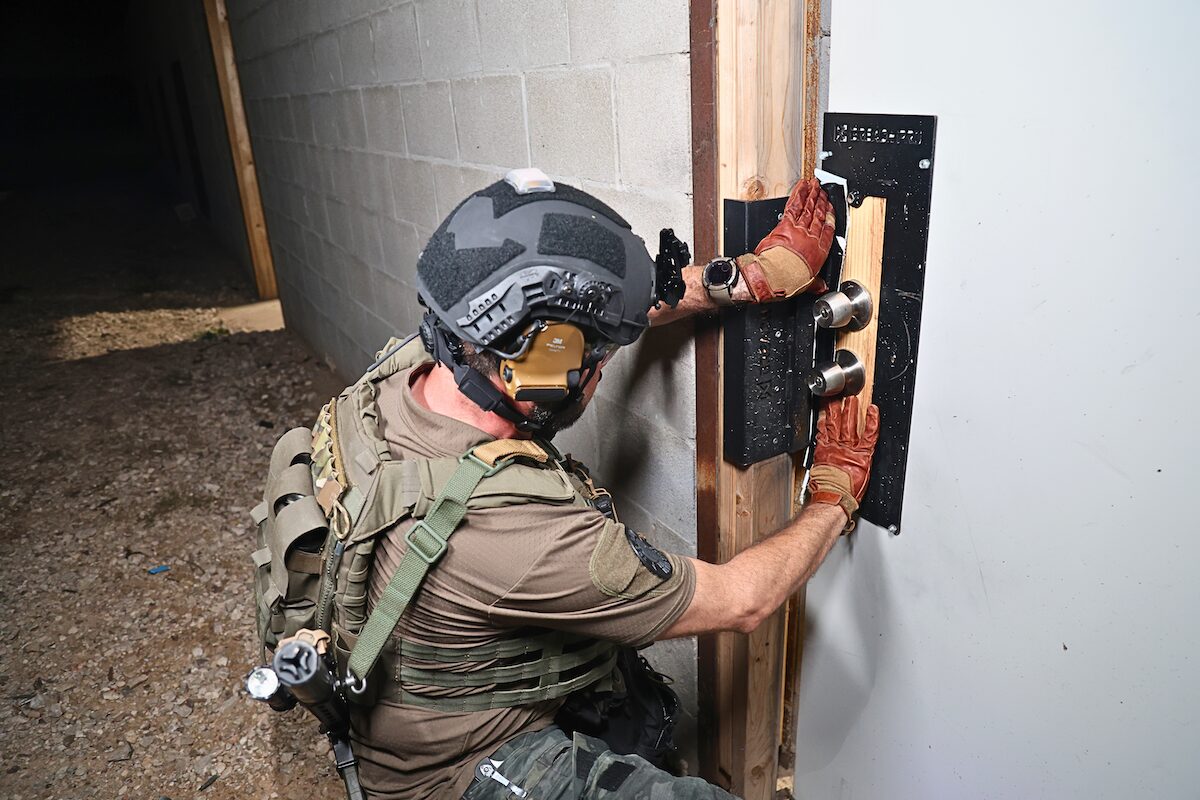
How to Justify Breaching Training Equipment in Your Department’s Budget
Getting a team to agree that better breaching training would be useful is usually not the difficult part.
Getting the equipment into the budget can be.
A team leader or training coordinator may immediately understand why more repetitions, faster resets, and better training infrastructure matter. A chief, commander, purchasing department, or municipal administrator has a different responsibility. They have to compare that request against vehicles, body armor, communications equipment, staffing, ammunition, medical equipment, facility improvements, and plenty of other legitimate needs.
So a request that amounts to “our team needs a better breaching door” is easy to postpone.
A good breaching training equipment budget justification gives leadership something more concrete to evaluate: the capability the team is responsible for maintaining, what currently limits that capability, what those limitations cost, and what the proposed equipment would change.
Start With the Training Problem
Don’t build the request around the product. Build it around the problem your department needs to address.
That may be limited access to suitable doors, excessive reset time, recurring material expenses, dependence on a particular facility, or simply an inability to generate enough repetitions during the training time available.
Be specific.
For example:
Our current breaching training requires disposable doors and significant setup between evolutions. This limits the number of repetitions personnel can complete during scheduled training and creates recurring material and labor costs throughout the year.
Now leadership knows what problem the purchase is supposed to solve.
The next step is showing them the numbers.
Document What the Current Process Costs
Start with the expenses your department already incurs.
Depending on how your team trains, those can include doors, frames, locks, hinges, fasteners, other hardware, transportation, installation, removal, disposal, consumables, range or facility fees, and personnel hours.
Look at the previous 12 months if possible.
How much material did the team consume? How many training days were conducted? How much time went into preparation and reset? How many useful repetitions did personnel actually receive?
From there, calculate the approximate cost per training event and cost per rep.
This gives leadership a baseline instead of asking them to evaluate a new purchase in a vacuum.
Compare Total Cost of Ownership, Not Purchase Price
A reusable training system is almost certainly going to cost more than one disposable door.
But the department isn’t buying one disposable door.
It is buying doors, hardware, materials, and labor repeatedly for as long as the current training model continues.
Run the comparison over one, three, and five years.
For the existing process, account for recurring materials, labor, transportation, facility expenses, and other costs.
For the proposed system, include the purchase price along with expected consumables, maintenance, and operating costs.
Then compare what each option provides over that period.
This is particularly important when a system can support a large number of repetitions. The acquisition cost remains relatively fixed while the cost per rep can decrease as utilization increases.
Show How Often the Equipment Will Be Used
Leadership should know whether the department is buying something that will sit in storage or become part of the regular training program.
Estimate how many training events the system will support each year, how many operators will use it, and approximately how many repetitions it can facilitate.
If the same infrastructure can support several authorized training methods, multiple instructors, different teams, or joint-agency training, include that information as well.
A piece of equipment used twice a year is difficult to justify on the same terms as one used twice a month.
Utilization gives the purchase context.
Put a Value on Training Time
Material costs are easy to see because somebody receives an invoice.
Lost training time is less obvious.
If personnel spend the first part of a training day installing doors and another portion of it resetting or replacing targets, the department is already paying for those hours. It is simply receiving less training during them.
Document how long the current process takes.
How many personnel are involved in setup? How long does a typical reset take? How much time is spent cleaning up or transporting materials?
If a proposed system materially reduces those requirements, include that in the justification.
For a tactical team with limited opportunities to assemble everyone for training, getting another hour of productive work out of an existing four-hour block can be as important as saving money on hardware.
Explain Any Facility Limitations
Not every department has a dedicated breaching facility available whenever it wants to train.
Some teams rely on borrowed buildings, structures scheduled for demolition, another agency’s facility, or a range with limited availability. Others have to travel.
If that describes your program, document it.
Training infrastructure that can be used in more locations or reduces dependence on a specialized facility can increase the number of opportunities the team has to train throughout the year.
That can be particularly valuable for smaller departments, regional teams, and units that have personnel spread across multiple assignments.
Look at Funding Options Early
The Breach Pro website showcases law-enforcement funding and grant opportunities, including Byrne JAG, as an area departments may want to investigate when planning a purchase.
Funding rules, allowable expenses, priorities, and eligibility can change, so a department should verify the current requirements before assuming a particular piece of equipment qualifies.
Depending on the agency and jurisdiction, potential funding sources may include department training or equipment budgets, state and federal grant programs, regional initiatives, task-force funding, or joint purchasing arrangements.
If outside funding is part of the plan, start researching it before the budget request is due.
Give Leadership a Way to Measure the Purchase
A good proposal should also explain how the department will know whether the investment was worthwhile.
The team can track basic information such as:
-
- Number of training events
-
- Number of personnel trained
-
- Number of repetitions
-
- Setup and reset time
-
- Consumable expenses
-
- Instructor or support hours
-
- Outside facility use
-
- Training methods supported
That information can help justify future training expenditures and gives leadership a straightforward way to evaluate the purchase after the first year.
Sample Breaching Equipment Budget Justification
The strongest justification will use your department’s actual numbers, but this framework gives you somewhere to start:
Operational Need
Our tactical team is responsible for maintaining breaching capability as part of its operational responsibilities. Our current training process depends on [current materials/facility], which limits training through [cost, availability, setup time, training volume, or another documented constraint].
Current Training Cost
The department currently spends approximately [$X] annually on [doors, hardware, consumables, facilities, transportation, labor, etc.] to support approximately [X] breaching training events and [X] repetitions.
Proposed Equipment
We are requesting [equipment/system] to provide reusable training infrastructure and reduce our dependence on [disposable materials, extensive rebuilding, specialized facilities, etc.].
Expected Use
The equipment is expected to support approximately [X] training events and [X] personnel annually, with an estimated [X] repetitions per year.
Total Cost
Our current process is projected to cost approximately [$X] over [three/five] years. The proposed equipment is projected to cost [$X] during the same period, including estimated consumables and maintenance.
Measurement
The team will document training events, personnel trained, repetitions, consumable expenses, and setup/reset requirements to evaluate utilization and overall value.
Give Decision-Makers a Complete Picture
The point of a budget justification isn’t to make the equipment sound impressive. It is to make the decision easier to evaluate.
Show leadership what your team is required to train, what currently makes that difficult, what the existing process costs, how often the proposed equipment will be used, and what measurable improvement the department can reasonably expect.
Breach Pro develops reusable training systems for teams trying to get more productive training out of limited time, personnel, facilities, and budgets.
If you’re putting together a procurement request, contact Breach Pro to discuss your current training process, system requirements, and the information your department needs to evaluate the purchase.