
Sub-Total: $0.00
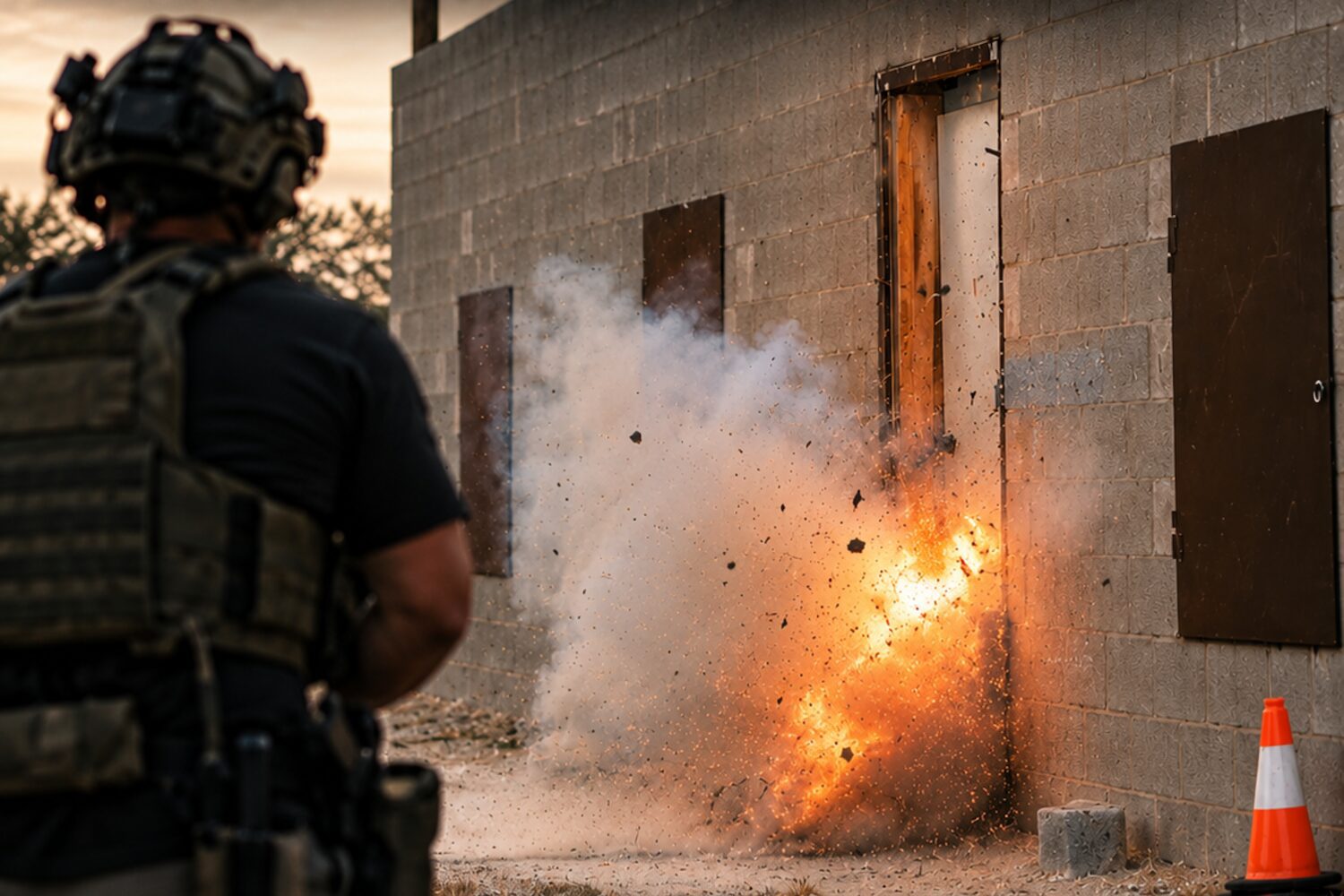
Reusable vs. Real Doors for Breaching Training: A Complete Cost-Per-Rep Analysis
Spending less on the doors used for training does not necessarily mean the overall cost of breaching training is low.
For a tactical team maintaining forced-entry proficiency, the price of the door itself is only one part of the expense. Every disposable door has to be sourced, transported to the training site, installed, fitted with the necessary hardware, breached, removed, and disposed of. Someone has to do that work, and it takes time away from the training day.
Then, when the team trains again, the process starts over.
That matters because breaching is a perishable skill. Teams cannot expect to maintain proficiency by touching the skill occasionally. Operators need regular, deliberate repetitions, which means the real cost of a breaching program should be measured over hundreds or thousands of reps—not one door at a time.
This is where the economics of a reusable breaching training door begin to look very different from the purchase price alone.
What Does One Breaching Rep Actually Cost?
A department looking at its current training expenses should account for more than the doors it buys.
The actual cost may include:
- Doors and frames
- Locks, hinges, fasteners, and other hardware
- Consumable training materials
- Transportation
- Installation and removal
- Personnel hours for setup and reset
- Cleanup and disposal
- Facility or range expenses
- Storage
A real door alone may cost approximately $150–$400 before the additional expenses are factored in. One door may be manageable. A recurring program that requires a steady supply of them is another matter.
A more useful calculation is:
Total cost of training ÷ useful training repetitions = cost per rep
That gives a department a much clearer picture of what it is actually spending to maintain breaching proficiency.
Consider a 20-Person Tactical Team
Take a 20-person SRT that conducts some form of breaching training once a week for 48 weeks.
Even if each operator receives only a few repetitions during each session, the team can quickly accumulate hundreds of reps over the course of a year.
With real doors, those repetitions require a continuing supply of training targets and hardware. More reps generally mean more doors, more setup, more cleanup, and more labor.
Over three years, the department should calculate the total cost of:
doors + hardware + consumables + transportation + installation + removal + disposal + facility expenses + personnel time
Then divide that figure by the number of useful repetitions the team received.
Now run the same calculation for a reusable breaching training system:
initial system cost + consumables + maintenance + transportation/setup
divided by the number of reps the system supports during those same three years.
This is a much more useful comparison than putting the price of a training system next to the price of one door.
Don’t Leave Labor Out of the Calculation
Labor is one of the easiest costs to overlook because there may not be a separate invoice for it.
If two or three people spend several hours collecting doors, moving them, installing them, replacing hardware, resetting the training area, and cleaning up afterward, those hours are part of the cost of training.
More importantly, some of those hours may come directly out of the team’s available training window.
A four-hour block on the schedule does not necessarily equal four hours of training. If a significant portion of that time is spent rebuilding targets or waiting for the next evolution to be ready, the team gets fewer repetitions from the same block of personnel time.
For agencies already dealing with staffing requirements, overtime, limited range availability, and crowded training calendars, the ability to reset quickly has real value.
The More You Train, the More the Math Changes
Reusable training systems make the most financial sense when they are actually used.
A department that conducts very little breaching training may not see the same return as a team running regular training throughout the year. But as training volume increases, the economics begin to change.
With disposable doors, recurring costs generally continue with every training cycle.
With reusable infrastructure, the original investment is spread across more and more repetitions.
That is why a team should look at expected use over one, three, and five years rather than comparing purchase prices on day one.
The goal is not simply to own a reusable training prop. The goal is to use it enough that the department can train more often and make better use of the resources it is already spending on personnel, instructors, and training time.
Cost Per Rep Is Only Half the Story
There is another question worth asking: How much training can the system actually support?
A training system that is inexpensive but slow to reset can still limit the number of operators who get meaningful reps. A system that only supports one type of training may require the department to purchase or build additional props later.
Before buying, teams should look at:
- Reset time
- Number of repetitions the system can support
- Breaching methods supported
- Consumable requirements
- Portability
- Storage
- Facility requirements
- Setup time
- Instructor workload
- Long-term maintenance
The best value is not automatically the system with the lowest price. It is the system that provides the training capability the team needs at a sustainable total cost.
Does That Mean Teams Should Stop Training on Real Doors?
No.
Real doors, varied construction, unfamiliar hardware, and imperfect structures still provide valuable training. Operators should understand that the world will not always look like the training environment.
The better approach is to use each resource where it provides the most value.
Reusable infrastructure can handle the high volume of repetitions needed to develop and maintain fundamental skills. Real doors and other structures can then be used deliberately when the training objective calls for variability or exposure to different construction.
Instead of destroying expensive materials just to get routine reps, teams can save those resources for the training that actually requires them.
Five Questions to Ask Before Buying a Reusable Breaching Training System
Before comparing systems, get clear answers to five questions:
- How quickly can the system be reset?
- Which breaching methods can be trained on it?
- What consumables are required and what do they cost?
- What are the installation, facility, storage, and transportation requirements?
- What will the system realistically cost to operate over three to five years?
Those answers will tell you far more about the actual value of a system than its purchase price alone.
Run the Numbers on Your Current Program
If your team is considering reusable breaching training infrastructure, start by looking backward.
Take the last 12 months of training and calculate what you spent on doors, frames, hardware, consumables, transportation, facility use, setup, and cleanup. Include the personnel hours required to make those training days happen.
Then determine how many useful repetitions your team actually received.
That gives you a real baseline.
Breach Pro builds reusable breaching training systems around a simple objective: help teams spend less time rebuilding the training environment and more time training in it.
When you’re comparing real doors with reusable training infrastructure, don’t compare the price of one door with the price of one system.
Compare what it costs your team to get the reps it needs.